


West Gate Tunnel air quality
West Gate Tunnel air quality
The West Gate Tunnel has best-practice ventilation systems to help protect the health of communities and drivers using the tunnels.
The system has been designed to manage emissions from traffic and meet Victoria’s rigorous air quality standards.
How it works
Our tunnel ventilation systems are designed to maintain safe air quality, both inside and outside the tunnel.
The ventilation system in the West Gate Tunnel includes two ventilation structures. One is above the northern tunnel portal near the Maribyrnong River and the other above the southern (outbound) tunnel portal within the West Gate Freeway.
Ventilation systems work by drawing in fresh air from the tunnel entry. This air is then pushed through the tunnel by movement of jet fans and vehicles.
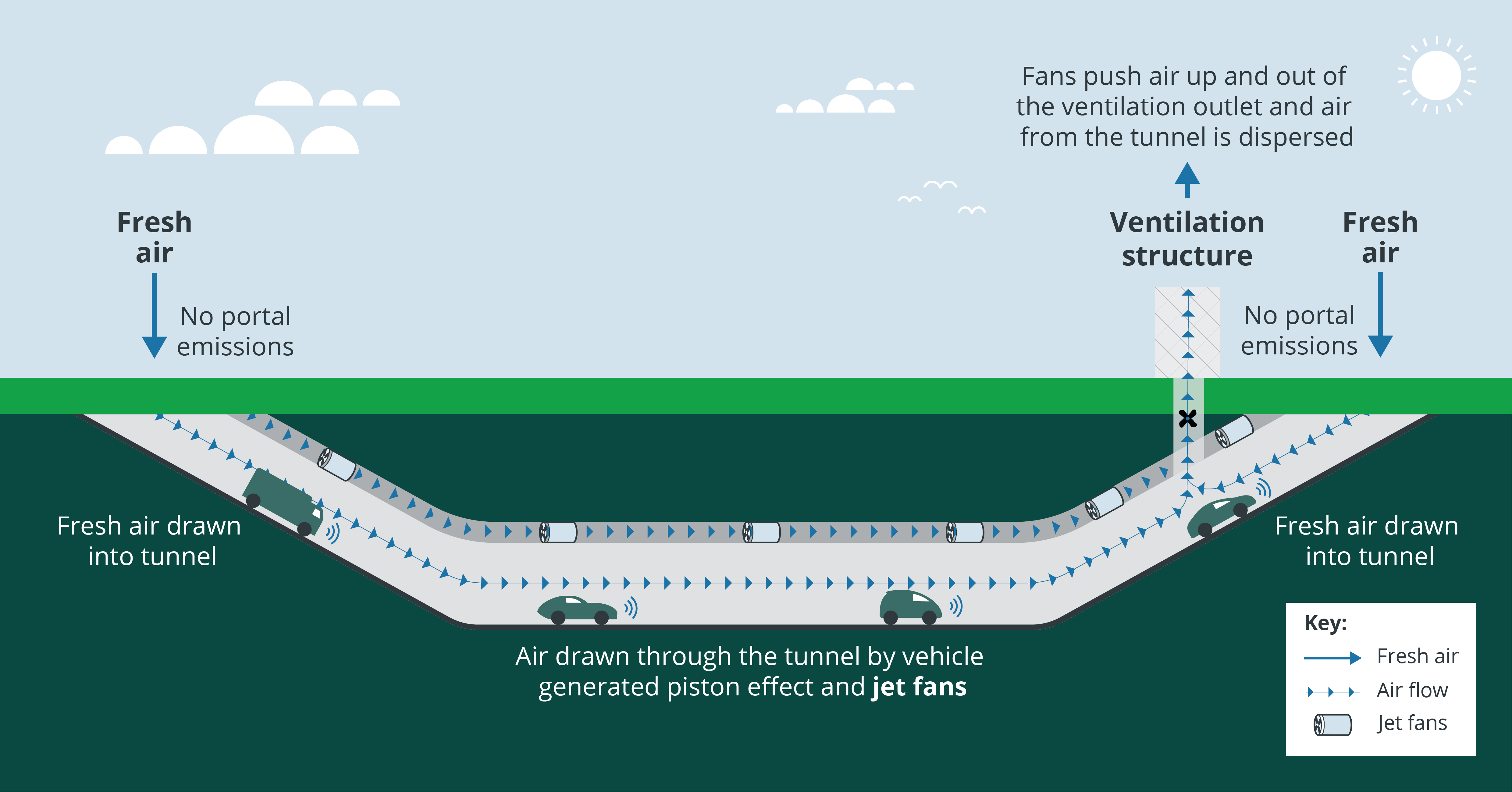
Ventilation systems work by drawing in fresh air from the tunnel entry. This air is then pushed through the tunnel by movement of jet fans and vehicles.
How the ventilation system is designed
We use an internationally recognised air dispersion model to assess the design and height of ventilation structures and safely disperse emissions.
The model takes into account local air quality, weather, topography and assumptions about types of vehicles and what emissions they’ll have.
The modelling is based on worst-case scenarios, including constant traffic congestion and no future improvements in vehicle standards.
Air quality monitoring data from commencement of operation of the tunnels is published below.
West Gate Tunnel Reports
Please refer to the Victorian Government’s Big Build website for Air quality monitoring reports produced during the construction phase
Disclaimer
The data uploaded to this website comes from air quality monitoring instruments and sensors installed in and around tunnel(s). Ambient air quality data is collected by third parties and may be subject to instrument or communication faults, weather or other environmental events, or server issues.
The daily ambient air quality data used in the compilation of this page has undergone only preliminary quality assurance checks. This data must be preliminary until a monthly quality assurance check/validation process has been undertaken by a person or organisation accredited by the National Association of Testing Authorities (NATA). For further detailed description and explanation of the quality assurance and data validation process, please review the monthly report documents included on this page.
Validated data will become available on this page approximately one month after the end of the calendar month. For example, the January data which has been validated will become available at the end of February. Validated air quality data reports are published monthly on this page.
If you require more information or have questions about our site's disclaimer, please feel free to contact us by email at viccommunity@transurban.com.